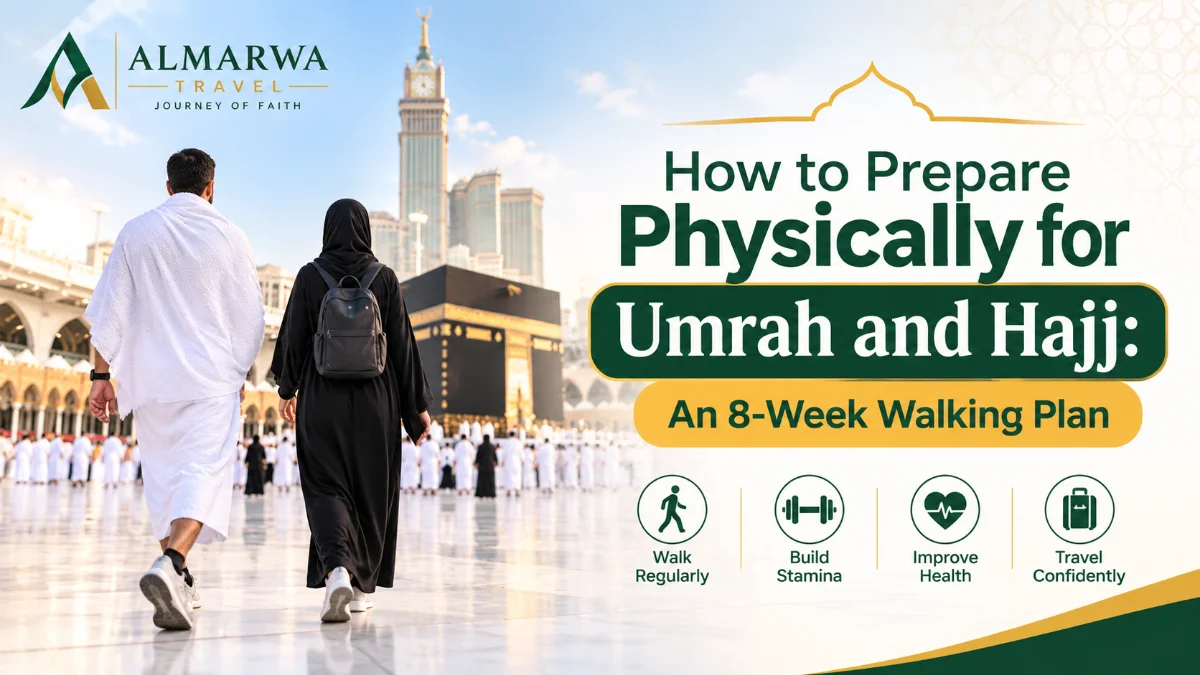
How far do pilgrims really walk during Hajj? Far more than most people expect. Between seven circuits of tawaf around the Kaaba (often 1.4 km or more), the 3.15 km of sa'i between Safa and Marwah, and the walk from Mina to the Jamarat — frequently 3 to 4 km each way — many pilgrims cover 40 to 60 kilometres over the days of Hajj, regularly hitting 20,000 to 40,000 steps a day. It's the detail that surprises pilgrims most when they book their Umrah packages from the UK — and the reason smart preparation starts months before you fly.
How Much Walking Is Umrah and Hajj?
The single biggest physical surprise for first-time pilgrims is the distance. The rituals themselves involve serious walking, and that is before you count the daily trips between your hotel and the Haram for five prayers.
| Activity | Approximate Distance |
|---|---|
| Tawaf (7 circuits, ground level) | 1.4 – 2.5 km |
| Sa'i (7 lengths, Safa ↔ Marwah) | ~3.15 km |
| One complete Umrah (tawaf + sa'i + general walking) | 5 – 7 km |
| Typical day in Makkah (hotel ↔ Haram for prayers) | 8 – 15 km |
| Mina to Jamarat (one way, depending on tent location) | 1.5 – 4 km |
| Muzdalifah to Mina (many pilgrims walk this) | 3 – 5 km |
| Total across the core days of Hajj | 40 – 60+ km |
| Typical daily step count during Hajj | 20,000 – 40,000 steps |
Distances vary with your hotel location, crowd density and which level of the mosque you use — tawaf on the upper floors is considerably longer than on the mataf. The lesson is the same either way: pilgrims who train beforehand enjoy their ibadah. Pilgrims who don't, spend it exhausted.
The 8-Week Walking Plan
You do not need a gym membership or expensive equipment. You need comfortable footwear, consistency, and eight weeks. This plan assumes a typical baseline; if 20 minutes feels difficult right now, begin with 10 and build from there.
| Week | Sessions | Duration | Focus |
|---|---|---|---|
| 1 | 3 walks | 20–30 min | Comfortable pace on flat ground |
| 2 | 4 walks | 30 min | Add gentle hills or inclines |
| 3 | 4 walks | 40 min | Brisker pace; carry a small water bottle |
| 4 | 4–5 walks | 45–50 min | Wear your pilgrimage footwear on some walks |
| 5 | 5 walks | 60 min | One longer 90-minute weekend walk |
| 6 | 5 walks | 60 min | One 2-hour walk; walk in the warmer part of the day, safely |
| 7 | 4–5 walks | 45–60 min | One 2.5-hour walk; practise in your ihram sandals |
| 8 | 3 walks | 30–40 min | Taper week — easy pace, rest well before your flight |
A few principles that make the plan work:
- Consistency beats intensity. Five moderate walks a week will prepare you far better than one heroic weekend hike.
- Train your legs, not just your lungs. Add stairs, hills, and simple exercises like sit-to-stands and calf raises twice a week. Standing for long prayers and queuing in Mina demands leg endurance.
- Simulate real conditions. By week six, walk at the time of day you'll be moving during Hajj — late morning and afternoon — and carry a small bag with water.
- Never skip the taper. Week eight is about arriving fresh, not cramming fitness.
Getting Your Feet Ready: Footwear and Blisters
Your feet are your transport during Umrah and Hajj. Treat footwear as seriously as your flights and accommodation.
Break everything in early. Buy your footwear at least six to eight weeks before departure and walk in it regularly. Brand-new shoes on day one of Umrah is one of the most common — and most avoidable — mistakes pilgrims make.
Understand the ihram rule. While in ihram, men must wear footwear that leaves the ankle exposed, which is why secure walking sandals with straps are the standard choice for tawaf and sa'i. Look for cushioned soles, arch support and adjustable straps. Women are free to wear comfortable trainers or walking shoes throughout, and men can wear trainers whenever they are not in ihram.
Prepare for marble floors. The mataf and sa'i areas are polished marble, and many pilgrims perform both barefoot. If your feet have never walked barefoot on hard, smooth surfaces, start with short barefoot walks at home so the soles adapt gradually.
Pack a small foot-care kit:
- Blister plasters (hydrocolloid type) — apply at the first sign of a hot spot, not after the blister forms
- Petroleum jelly to reduce friction on long walking days
- Antiseptic wipes and plasters
- Moisture-wicking socks (outside ihram) and spares
- Nail clippers — trim nails a few days before travel
Heat, Hydration and Sleep
Makkah regularly exceeds 35–40°C from late spring through early autumn. Hajj 2027 is expected to fall in May (subject to moon sighting), which means most pilgrims reading this should plan for real heat.
Hydration is a discipline, not a reaction. Sip water regularly rather than waiting for thirst. Zamzam water is freely available throughout both the Haram in Makkah and Masjid an-Nabawi in Madinah. On the longest days — Arafat, and the Jamarat days — add an electrolyte sachet to your water.
Know the warning signs of heat exhaustion: headache, dizziness, nausea, muscle cramps, unusual fatigue or confusion. If you notice any of these, stop, move to shade, cool down and seek help. Medical centres operate throughout the Hajj sites, and seeking help early is a sign of wisdom, not weakness.
Sleep will be disrupted — plan for it. Hajj involves overnight movement, including the night at Muzdalifah. In the weeks before travel, build a solid sleep routine, and pack earplugs and an eye mask. After arrival, give yourself a day to adjust to Saudi time and take short afternoon naps rather than fighting fatigue.
Dress for the climate. Light-coloured, breathable fabrics; a light sun umbrella for the walk to the Jamarat; and if you're a man, choose a light, good-quality cotton ihram.
Preparing If You Are Older or Have a Health Condition
Thousands of older pilgrims and people with managed health conditions complete Umrah and Hajj safely every year. Preparation is what makes the difference.
- See your GP 8–12 weeks before departure. Discuss fitness to travel, review your medication, and request enough supplies for the whole trip plus extra. Carry medication in your hand luggage with a doctor's letter.
- Vaccinations. The meningococcal ACWY certificate is a requirement for Hajj and Umrah visas, and seasonal flu and COVID-19 vaccinations are strongly recommended. Check the current Saudi health requirements well before you travel, as they are updated each season.
- Diabetes, heart or blood pressure conditions. Plan meals around the rituals, carry glucose or snacks, wear medical alert identification, and make sure your group leader knows your situation.
- Mobility support is widely available. Tawaf and sa'i can both be performed in a wheelchair, wheelchairs and electric scooters are available in the Haram, and the upper floors are designed for wheelchair users. Tell us when you book your Hajj packages and we'll arrange assistance in advance — so it's waiting for you, not something you have to hunt for in the heat.
- Pace yourself without guilt. Rest between rites, use shaded areas, and never skip meals to "save time." Hajj is not a race — completing it with presence and dignity matters more than speed.
- Travel insurance should explicitly cover your pre-existing conditions.
The Spiritual Side of Preparation
Physical training for Hajj is not separate from worship — it is part of answering the call. Every rite you will perform involves the body: walking, standing, enduring. Building stamina now means that on the Day of Arafat, you will be present in dua rather than distracted by aching legs.
Use your training walks deliberately. Listen to the talbiyah. Learn and repeat the duas of tawaf and sa'i as you walk, so the words are already on your tongue when you first see the Kaaba. Memorise what you want to ask of Allah — the hills of your neighbourhood are a fine place to practise.
Above all, train your patience. Crowds, queues, delays and discomfort are not obstacles to Hajj; they are part of it. The pilgrim who has practised sabr in small daily irritations will meet the big tests of Mina with a steadier heart. Your health is an amanah, and preparing it well is a way of honouring the invitation you have been given: "Labbayk Allahumma Labbayk."
Frequently Asked Questions
How far do you walk during Umrah?
Tawaf is roughly 1.4–2.5 km and sa'i is about 3.15 km, so one complete Umrah involves around 5–7 km including general walking. Add daily trips between your hotel and the Haram for prayers, and most pilgrims comfortably walk 8–15 km per day in Makkah.
How far do you walk during Hajj?
Most pilgrims walk 40–60 km or more across the core days of Hajj, with daily step counts of 20,000–40,000. The biggest single walks are between Mina and the Jamarat (up to 4 km each way, depending on tent location) and the movement to and from Muzdalifah.
How can I prepare my body for Hajj?
Follow a progressive walking plan for at least eight weeks, add light leg-strengthening exercises, break in your footwear early, and get a GP check-up before travel. Consistency matters far more than intensity — regular 30–60 minute walks will transform your experience.
What shoes are best for Umrah?
For men in ihram, cushioned walking sandals with secure straps that leave the ankle exposed. Outside ihram, and for women throughout, supportive trainers or walking shoes. Whatever you choose, buy it six to eight weeks early and walk it in properly before you fly.
Should I see my GP before Hajj?
Yes — ideally 8–12 weeks before departure. Your GP can assess fitness to travel, review medication, issue repeat prescriptions and arrange the meningitis ACWY vaccination certificate required for your visa, along with any other recommended jabs.
Conclusion
Preparing physically for Hajj and Umrah does not require athletic talent — it requires an early start and eight consistent weeks. Walk regularly, protect your feet, respect the heat, look after your health, and let your training double as spiritual preparation. Do that, and the distances that overwhelm unprepared pilgrims will feel like exactly what they are: steps of worship, taken one at a time. And when you're ready to plan the journey itself, speak to the Al-Marwa Travel team — we'll help you choose the dates, hotels and flights that match your pace.
Planning your trip? See our Umrah packages and Hajj packages at Al-Marwa Travel — with flights from the UK, hotels close to the Haram, visa support, airport transfers and guided Ziyarat, we handle the details so you can focus on your ibadah. Call our team on 020 3504 6001 today and let us help you prepare for the journey of a lifetime.
View Hajj Packages